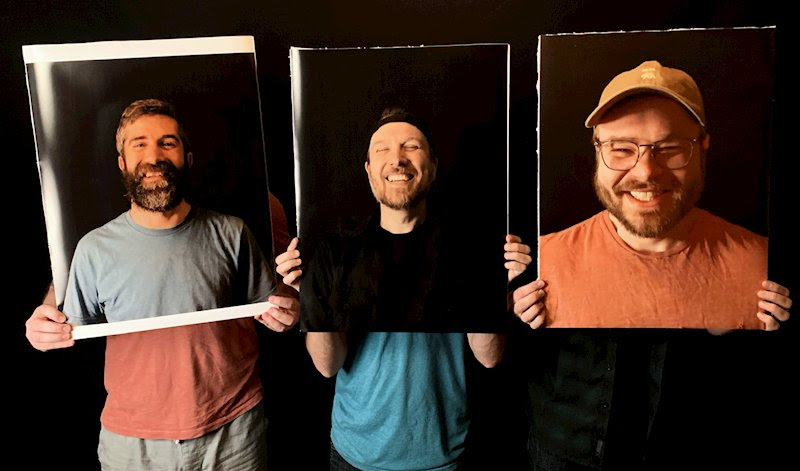
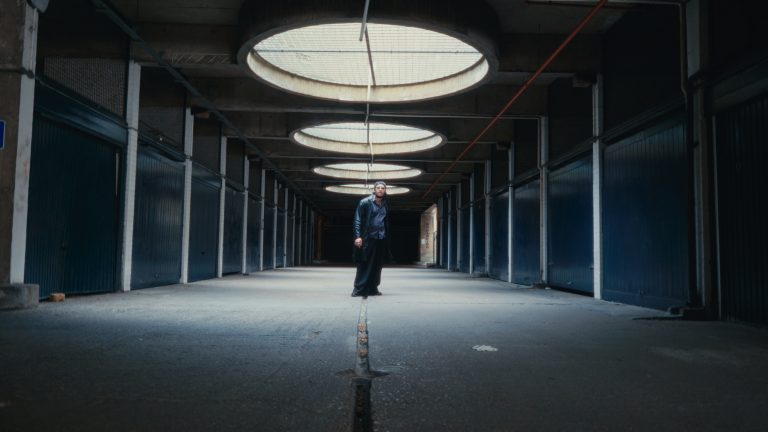
Nomadic Narwhal built its identity on oceanic mythology and cinematic scope — the kind of world-building that asks listeners to surrender to something vast and immersive. Call of the Current, out now via Seaborne Records, does something different. It’s smaller in the best possible sense: closer, more exposed, and more directly human than anything founder Jesse Beisner has put out under this name before.
We spoke with Beisner about what pushed him toward that emotional honesty, what orchestral music taught him about heaviness that guitar tones never could, and why the current detour from Nomadic Narwhal’s larger narrative is very much a feature, not a bug.
2022
Project Founded
DIY
Self-Produced & Painted
LW
Featured in Loudwire
May 1
Release Date, 2026
It was the first writing session. At that point it was obvious that it just had to get out of me and turn the page to the future.
— Jesse Beisner / Nomadic Narwhal
EV
“Call of the Current” feels far more personal and emotionally exposed than some of the earlier Nomadic Narwhal material. What pushed you toward that shift creatively?
NN
It very much is to be honest. Without trying to be vague, there is just a ton going on in my personal life and has been since the previous release. Things that require my full attention at home that I’m sure we can all relate to in one way or another. Call of the Current is truly an exercise of making the time to be creative and writing in order to feel normal again.
Writing to feel normal again — that’s a specific kind of creativity, the kind that doesn’t have an audience in mind when it starts. It makes sense that the result sounds different. It was made for different reasons.
EV
The project has often leaned into oceanic mythology and cinematic world-building. Was it difficult stepping away from those larger themes and writing from a more vulnerable place?
NN
Yes with thinking about it from the fan perspective! However the decision ultimately came with the fact that Nomadic fans are the MOST awesome people I continue to engage with. These are very heartfelt people that are deep and just as passionate about music and the ocean as I am. They ultimately deserve an explanation for the wait — as for some of them, listening to Nomadic is their way to unwind too. I figured this would be a way to communicate my gratitude as well as getting a little deeper with them.
The audience awareness here is notable. This wasn’t a purely self-indulgent turn — Beisner thought about what his listeners use the music for and decided to honor that by being honest with them, not by giving them exactly what they expected.
EV
You described this track as “the one with the feelings.” At what point did you realize emotional honesty mattered more than polish for this release?
NN
It was the first writing session. At that point it was obvious that it just had to get out of me and turn the page to the future.
First session. No deliberation. That instinct — to trust the song’s emotional urgency over its technical refinement — is exactly what gives Call of the Current the texture it has. Polish can wait. Some things can’t.
EV
Nomadic Narwhal has been described as “Cinematic Metal.” What does that term mean to you personally, and how consciously do you think about creating atmosphere versus traditional songwriting?
NN
I take that term quite literally and with responsibility. I’ve always been fascinated by orchestral music and film scores from the 80’s to the modern era. Particularly composers from the romantic era like Dvořák and Korsakov are always huge reminders that no matter how much I learn, it will only be a fraction of what giants like that have probably forgotten. The added bonus is the ocean narratives with this project. So really there’s endless inspiration as well as endless creative learning.
No matter how much I learn, it will only be a fraction of what giants like Dvořák and Korsakov have probably forgotten.
— Jesse Beisner / Nomadic Narwhal
That’s not false modesty — it’s the orientation of someone who takes influence seriously. Naming Dvořák and Korsakov as the standard you’re measuring yourself against is a statement about what Cinematic Metal actually means to Beisner. It’s not a genre tag. It’s an aspiration.
EV
There’s a strong DIY spirit throughout this release — from the self-production to the hand-painted artwork. How important is creative control to the identity of the project?
NN
It’s imperative. This project has a lot of opportunities to explore a vast array of sounds and vibes however it can be really easy to get lost in some of them. It’s very important to stay mindful of the big picture and try to indulge in these areas without derailing the project.
Creative control here isn’t about ego — it’s about coherence. A project with this much sonic range needs a single point of gravity. Beisner is that point. Without it, Nomadic Narwhal risks becoming unrecognizable to itself.
EV
Sonically, the project balances heaviness with restraint in a way that feels very intentional. How do you know when a song needs aggression versus space?
NN
By listening back way too much lol. I found listening back when I wake up for some reason helps if there’s a vibe I’m trying to achieve. Quite often the sections written the night before will get set aside — not because it was bad, but because it didn’t feel quite right.
Fresh ears in the morning. It’s a deceptively simple process that separates a good instinct from a confirmed decision. The sections that survive the overnight test earn their place. The ones that don’t — however good they sound at midnight — are probably serving a different song.
EV
Deftones and Devin Townsend are both mentioned as reference points, but the project still feels distinct. Which artists or albums shaped your understanding of emotional heaviness the most?
NN
Misery Signals and Remembering Never really got me thinking more emotionally in the early 2000’s but discovering orchestral music was really the flag on the moon for me. There’s no vocalist telling me their story or telling me how to feel. The emotion is just there, raw, expertly written, and performed. The most beautiful sounding instruments can turn on a dime and be incredibly brutal or full of sorrow then take you to an even higher peak. No down-tuning, amps, or pedals…. “What the hell just happened and how’d they do that?!”
There’s no vocalist telling me their story or telling me how to feel. The emotion is just there, raw, expertly written, and performed. What the hell just happened and how’d they do that?
— Jesse Beisner / Nomadic Narwhal
That revelation — that orchestral music could be brutal without a single distorted guitar — is the conceptual heart of what Nomadic Narwhal is trying to do. It’s heavy music that learned its lessons from an entirely different tradition. That’s why it sounds like nothing else in the genre.
EV
The ocean has always been central to Nomadic Narwhal’s imagery and identity. What is it about the sea that keeps pulling you back creatively?
NN
We’re all drawn to the ocean in one way or another — most of us dream about vacations on the beach, right? There’s something primal about it, like staring into the campfire. I could watch the waves crash all day and am sure some of us even have. Why not have a soundtrack for the days that you can’t be in the water?
A soundtrack for the days you can’t be in the water. That’s the clearest statement of purpose Nomadic Narwhal has ever offered — and it explains exactly why the project built a following of ocean and music people simultaneously. It’s filling a gap that nobody else had thought to fill.
EV
What has the response been like from longtime listeners now that the music is moving into more personal territory?
NN
Genuine surprise and relief.
Three words. The surprise is understandable — this is a departure. The relief is the more interesting reaction. It suggests the audience was ready for Beisner to let them in, and that the wait had been felt on both sides.
EV
Looking ahead, does “Call of the Current” represent a temporary detour emotionally, or the beginning of a new chapter for Nomadic Narwhal?
NN
This is a temporary detour. Not to say that there won’t be tracks like it in the future but the narrative will resume in an interesting way.
The narrative will resume. Whatever Nomadic Narwhal surfaces with next, Call of the Current has already done its job — it kept the project alive during a hard stretch and gave the audience something real in return. Stream it now via Spotify and follow the project for what comes next. Are you an independent artist with a story to tell? Get featured on Exposed Vocals.