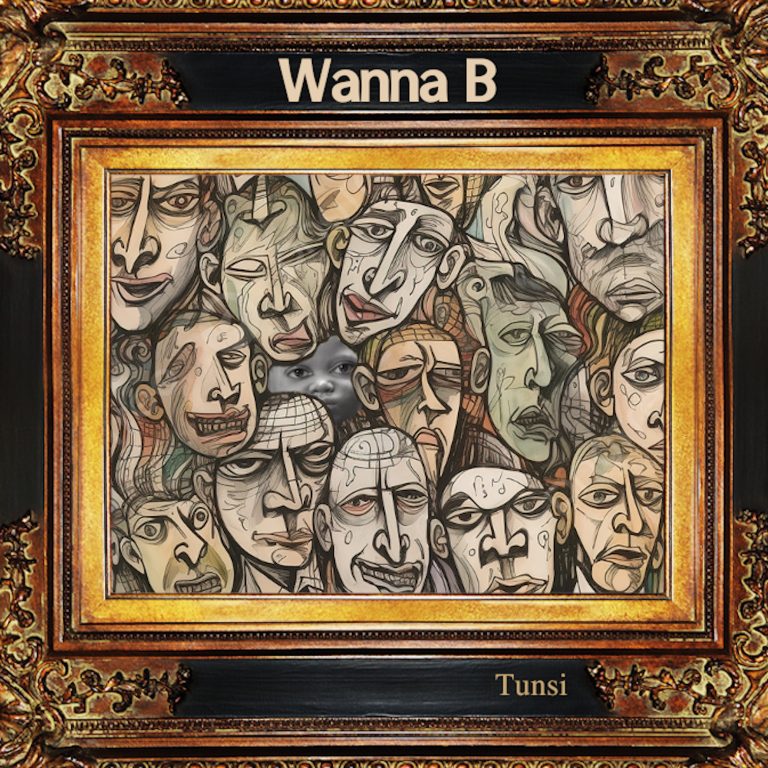
On “Wanna B,” Tunsi turns a familiar frustration into a blunt creative principle: imitation is not a shortcut to identity. The independent artist writes, produces and performs the record himself, pairing underground hip-hop foundations with electronic textures and a direct argument for originality. The track’s central question is not whether people can become someone else, but why they would surrender the chance to become fully themselves.
Exposed Vocals caught up with Tunsi to talk about the feeling that came before the beat, the value of creative unpredictability, the line between direct writing and interpretation, and why listeners should expect anything—but never something designed to fit a conventional mold.
Listen
Question 01
“Wanna B” is a title that can point toward ambition, imitation or frustration. What does it mean inside this song?
“Wanna B” is a song about me wondering why people just don’t want to be themselves—original. Always acting like someone they are not, they should realize they can only be the best at being themselves.
Question 02
You write, produce and perform your own work. Which part of “Wanna B” came first: the beat, a line, a feeling or a larger idea?
First came the feeling, then the beat, then the lyrics.
Question 03
Your music is described as deliberately unpredictable. What keeps that unpredictability coherent rather than random?
I’m unpredictable because I will always have something touching to say, usually frustrations within life—and there are so many. The consistency will be there because there will always be problems that listeners should be able to relate to. Basically, I constantly complain.
Question 04
What is the “unspoken” thing you wanted to say most clearly on this record?
You are slowly killing yourself and missing the opportunity for perfection by being someone else.
Question 05
Which detail in the production best represents your identity as a producer?
Underground hip-hop with electronic sounds.
Question 06
How do you decide when a lyric needs to be direct and when it should leave room for the listener to interpret it?
When I’m bragging lyrically, usually there’s room for interpretation, but when the song is about a specific matter I’m usually direct.
Question 07
What does being an underground artist give you creatively that a more conventional lane might take away?
Being underground allows me to create material that is not the same cookie-cutter type of music. Nothing conventional can subtract anything unless I’m not being myself.
Question 08
You’ve heard stories of the music changing people’s lives. Is there one listener response that stayed with you?
Yes: keep doing what I’m doing. Never stop.
Question 09
What do you believe people misunderstand about Tunsi when they hear the name or see the image for the first time?
With the name Tunsi, some people think I’m from Tunisia. People often stare at the image for some time trying to understand if it’s alive. They don’t know what to expect.
Question 10
After “Wanna B,” what should listeners pay attention to next?
Everything.
That final one-word answer is less evasive than it first appears. Tunsi’s point throughout “Wanna B” is that an independent artist does not need to narrow himself into a predictable pitch. The identity is the refusal to imitate, the permission to remain difficult to anticipate, and the discipline to keep saying what others leave unspoken.
Featured artwork created by Tunsi and published with permission.